Providing quality foot and ankle care with two office locations to serve you
Neuroma
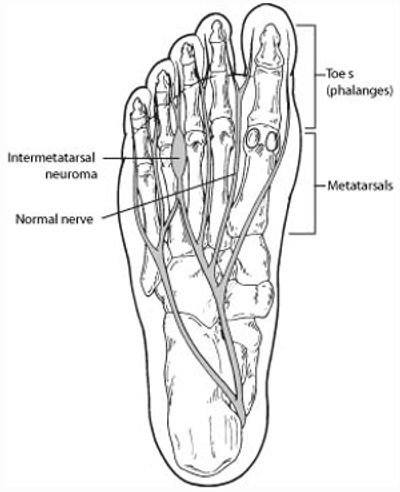
What is A Neuroma
A neuroma is a thickening of the nerve tissue that may develop in various parts of the body. In the foot, the most common area is in the interspaces with the 3rd and 4th interspace being the most common.
Causes
Neuromas are caused by compression or irritation of the nerve. One of the most common offenders is wearing shoes that have a tapered toe box or high-heeled shoes that cause the toes to be forced into the toe box. People with certain foot deformities—bunions, hammertoes, flatfeet or more flexible feet—are at higher risk for developing a neuroma. Other potential causes are activities that involve repetitive irritation to the ball of the foot, such as running or court sports. An injury or other type of trauma to the area may also lead to a neuroma.
Symptoms
- Tinging, burning or numbness
- Pain
- Feeling like something is inside the shoe or sock is bunched up
- Feeling like something is on or inside the ball of the foot
Diagnosis
To arrive at a diagnosis, the foot and ankle surgeon will obtain a thorough history of your symptoms and examine your foot. During the physical examination, the doctor attempts to reproduce your symptoms by manipulating your foot. Other tests or imaging studies may be performed.
Treatment
Non-surgical
- Padding
- Ice
- Orthotics
- Oral medication- NSAIDs
- Injections- cortisone or alcohol sclerosing
- Shoe wear modifications
- Activity modifications
Surgical
If nonsurgical treatment fails to adequately relieve pain and improve stability, surgery may be needed. This may entail decompressing the nerve or removing the nerve completely.